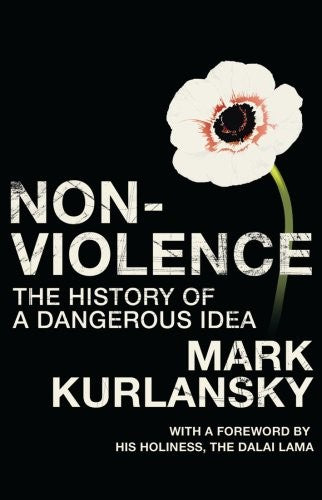
Cover may vary - this is a stock image
Nonviolence
What do the conditions mean?
Our conditions mean the following:
- New - a brand new book
- Almost New - appears new but is actually secondhand.
- Very Good - only minor imperfections such as minor scuffs to edge or cover or a price written in pencil or shop sticker.
- Standard Secondhand - Clearly been read before, but not too bad. We do not recommend these for gifting. Spines usually creased. Could also include creases or folds to cover, some writing such as in the cover or elsewhere, underlining or highlighting, but might not do. Possibly some stains or marks. Similar in general to books in any secondhand shop or charity shop.
- Poor Condition - Usually this will have a specific problem such as writing inside, water damage, missing dust jacket, heavy staining, large creases or cuts. These are readable copies but not nice ones. On other websites this condition is called 'Acceptable' or 'Fair' , but we want to be more honest.
Low stock: 1 left


The conventional history of nations, even continents, is a history of warfare. According to this view, all the important ideas and significant changes of humankind were put forward in an effort to win one violent bloody conflict or another.This approach to history is only one of many examples of how societies promote warfare and glorify violence. But there have always been a few who have refused to fight. Governments have long regarded this minority as a danger to society and have imprisoned and abused them and encouraged their persecution.This was true of those who refused Europe's wars, who refused to fight for their king, who refused to fight for Napoleon as well as against him. It was true of Virginia Woolf's sister Vanessa and her husband Clive Bell - outcasts in rural Sussex because they opposed World War I at a time when the British socialist movement described a bayonet as a weapon with a worker on each end.It was true of the first American draft dodger, a Menonite who believed in American independence but believed it was wrong to use violence and rejected the call of his local militia. It was true of the many abolitionists who had dedicated their lives to stopping slavery but refused to fight in the Civil War.Judaism, Islam, Christianity, Hinduism, Buddhism and, most impressively, the Menonites and the Quakers - all have passages in their major teachings rejecting warfare as immoral. In this brilliant exploration of pacifism, these points of view are discussed alongside such diverse non-violence theorists as Tolstoy, Shelley, Gandhi, Martin Luther King, Aldous Huxley, Erasmus, Confucius and Lao Tse to show how many modern ideas - such as a united Europe, the United Nations, and the abolition of slavery - originated in such non-violence movements.


Author: Mark Kurlansky (all their books in stock)
Format: Hardback
Published: 2006
Pages: 203
Publisher: Jonathan Cape
ISBN: 9780224077910
Payment method
Condition Descriptions
Our conditions mean the following:
- New - a brand new book
- Almost New - appears new but is actually secondhand.
- Very Good - only minor imperfections such as minor scuffs to edge or cover or a price written in pencil or shop sticker.
- Standard Secondhand - Clearly been read before, but not too bad. We do not recommend these for gifting. Spines usually creased. Could also include creases or folds to cover, some writing such as in the cover or elsewhere, underlining or highlighting, but might not do. Possibly some stains or marks. Similar in general to books in any secondhand shop or charity shop.
- Poor Condition - Usually this will have a specific problem such as writing inside, water damage, missing dust jacket, heavy staining, large creases or cuts. These are readable copies but not nice ones. On other websites this condition is called 'Acceptable' or 'Fair' , but we want to be more honest.
Shipping and Delivery
- Free UK shipping over £10.
- Under £10, shipping is £1.99.
- Express shipping £2.99.
- Choose 10 £1 books for £10 including shipping!
- International shipping available to select countries, proceed to checkout to see prices.
Return
Return books within 14 days if not happy.