


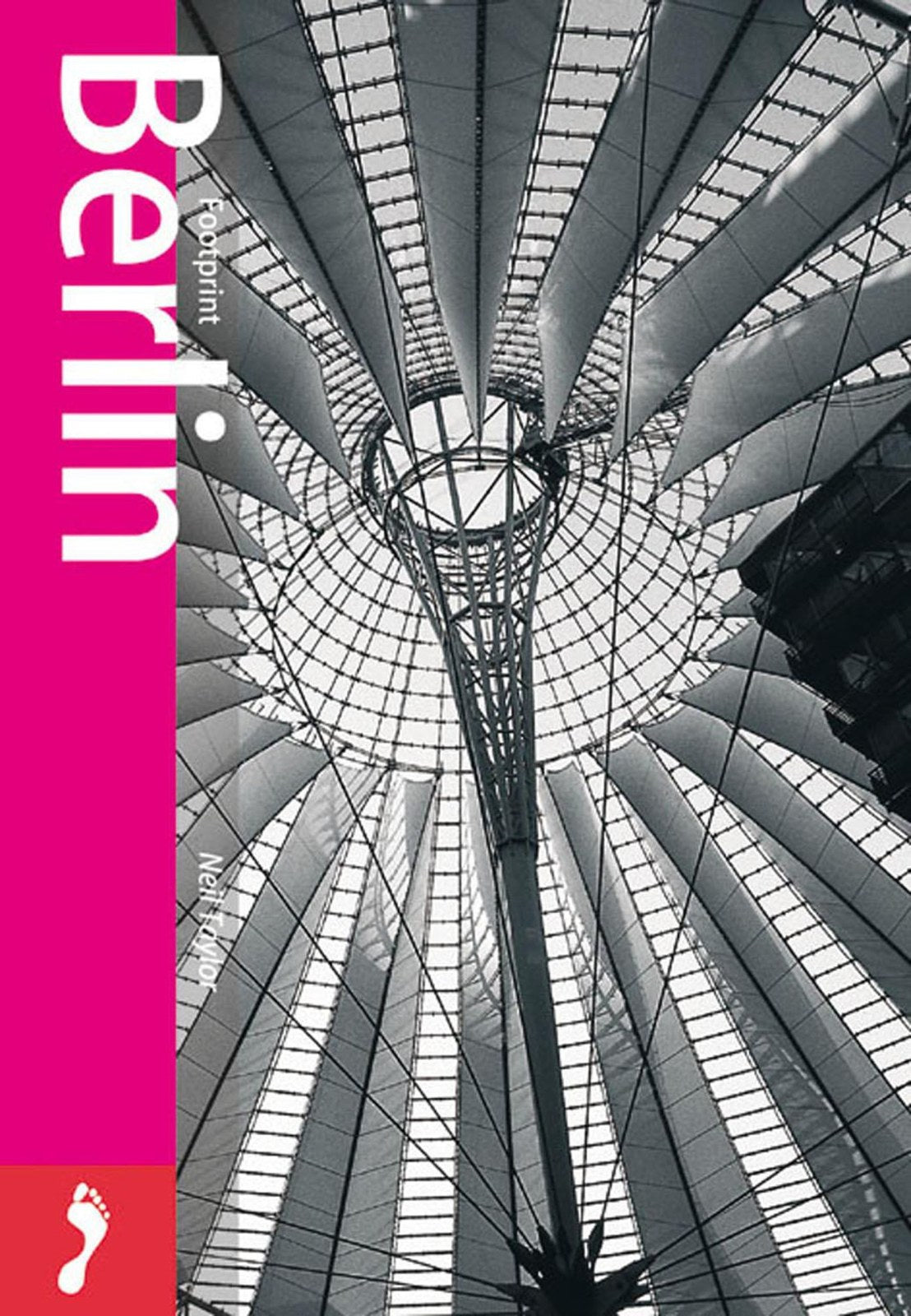
Cover may vary - this is a stock image
Berlin(Footprint Pocket Guides)
Format: Paperback
What do the conditions mean?
Our conditions mean the following:
- New - a brand new book
- Almost New - appears new but is actually secondhand.
- Very Good - only minor imperfections such as minor scuffs to edge or cover or a price written in pencil or shop sticker.
- Standard Secondhand - Clearly been read before, but not too bad. We do not recommend these for gifting. Spines usually creased. Could also include creases or folds to cover, some writing such as in the cover or elsewhere, underlining or highlighting, but might not do. Possibly some stains or marks. Similar in general to books in any secondhand shop or charity shop.
- Poor Condition - Usually this will have a specific problem such as writing inside, water damage, missing dust jacket, heavy staining, large creases or cuts. These are readable copies but not nice ones. On other websites this condition is called 'Acceptable' or 'Fair' , but we want to be more honest.
Low stock: 2 left
Berlin has grown up fast. Capital of a reunited Germany only since 1999, it has already earned its international spurs and no longer has to settle for being simply German. Visitors can leave Berlin without having experienced Germany: American musicals, Babylonian mosaics, French bakeries and Norman Foster creations are comfortably integrated into the buildings of Schinkel and the operas of Wagner. The city that needed a long period in rehab for some serious occupation therapy is now confident enough to woo British architects, Italian designers and Polish restorers to join the burgeoining multinational community. But though reunified Berlin has undergone a level of transformation rivalled only by post-Mao Tse Tung Shanghai, it has stuck to its principles. The capital of counter culture and inspiration for the likes of David Bowie and Iggy Pop has lost none of its radical, cutting edge reputation. Eastern wastelands are now "Ossi cool", where thousands of disused buildings have become squats for underground parties and art galleries.
Planners are bringing back to life the wastelands that once scarred this capital of divided alliances. Not only is Berlin attempting to build a mini Manhattan in its business zones, a gentrified NYC TriBeCa in residential Mitte and a London with its new government buildings in Mitte and Tiergarten, but it is bravely facing up to its past by commemorating holocaust victims on land that had visually marked its urban and political dichotomy. It is also celebrating its past. The former Parliament is back in action and, though the royal family is not, their statues are back and their palaces are now open to all. Trams once ridiculed in the West as a noisy legacy of communism are quietly extending their routes all over the city. Only the Nazi era is buried and covered with the rubble that marked its final days. The height and size of Berlin's new buildings as well as the pedigree of their architects show the city has no doubt about its long-term future. Much of the 20th century will, in due course, be remembered by historians as a grim aberration. New generations will hopefully continue Berlin's pioneering spirit at the speed dictated by those in power in the 1990s.


Berlin is the greenest of cities – visually and politically. The Grunewald (Green Wood) is an enormous park to the southwest of the city, propping it up like the neck stem of the country's brain. The Green Party is in the ruling coalition, protecting the proud statistic that Berlin has more trees than shops, if not yet more bicycles than cars. Its buildings have more glass than concrete and solar energy powers them. Berliners are avid recyclers with drinkers returning bottles to shops and train users sorting rubbish into bins on platforms. But recycling is just one of many trends that starts as radical, spreads elsewhere and then almost becomes conservative. Gays came out in the 1920s and so did cyclists and nudists. By the time art causes a stir in London or New York it is conventional in Berlin. Take a look at the future here and see if you think it works.
Genre: Travel, Europe
Format: Paperback
Published: 2003
Pages: 256
Publisher: Footprint Handbooks
ISBN: 9781903471579
Payment method
Condition Descriptions
Our conditions mean the following:
- New - a brand new book
- Almost New - appears new but is actually secondhand.
- Very Good - only minor imperfections such as minor scuffs to edge or cover or a price written in pencil or shop sticker.
- Standard Secondhand - Clearly been read before, but not too bad. We do not recommend these for gifting. Spines usually creased. Could also include creases or folds to cover, some writing such as in the cover or elsewhere, underlining or highlighting, but might not do. Possibly some stains or marks. Similar in general to books in any secondhand shop or charity shop.
- Poor Condition - Usually this will have a specific problem such as writing inside, water damage, missing dust jacket, heavy staining, large creases or cuts. These are readable copies but not nice ones. On other websites this condition is called 'Acceptable' or 'Fair' , but we want to be more honest.
Shipping and Delivery
- Free UK shipping over £10.
- Under £10, shipping is £1.99.
- Express shipping £2.99.
- Choose 10 £1 books for £10 including shipping!
- International shipping available to select countries, proceed to checkout to see prices.
Return
Return books within 14 days if not happy.
More £1 travel books
All £1 books →-

-

-
 by Katherine Rundell
The Explorer: From the author of the internationally bestselling phenomenon Impossible Creatures
From £1.00From £1.00 -
-

Kingston Upon Thames and Richmond Street Atlas
From £1.00From £1.00 -


