


Cover may vary - this is a stock image
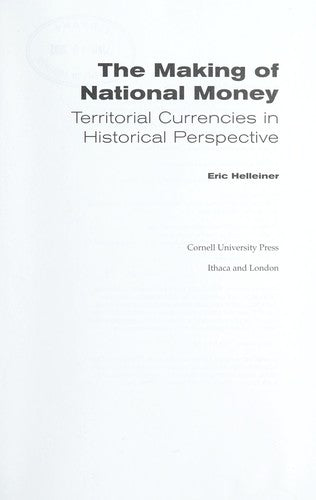
The Making of National MoneyTerritorial Currencies in Historical Perspective
Format: Hardback
What do the conditions mean?
Our conditions mean the following:
- New - a brand new book
- Almost New - appears new but is actually secondhand.
- Very Good - only minor imperfections such as minor scuffs to edge or cover or a price written in pencil or shop sticker.
- Standard Secondhand - Clearly been read before, but not too bad. We do not recommend these for gifting. Spines usually creased. Could also include creases or folds to cover, some writing such as in the cover or elsewhere, underlining or highlighting, but might not do. Possibly some stains or marks. Similar in general to books in any secondhand shop or charity shop.
- Poor Condition - Usually this will have a specific problem such as writing inside, water damage, missing dust jacket, heavy staining, large creases or cuts. These are readable copies but not nice ones. On other websites this condition is called 'Acceptable' or 'Fair' , but we want to be more honest.
Low stock: 1 left
Why should each country have its own exclusive currency? Eric Helleiner offers a fascinating and unique perspective on this question in his accessible history of the origins of national money.
Our contemporary understandings of national currency are, Helleiner shows, surprisingly recent. Based on standardized technologies of production and extraction, territorially exclusive national currencies emerged for the first time only during the nineteenth century. This major change involved a narrow definition of legal tender and the exclusion of tokens of value issued outside the national territory. "Territorial currencies" rapidly became bound up with the rise of national markets, and money reflected basic questions of national identity and self-presentation: In what way should money be managed to serve national goals? Whose pictures should go on the banknotes?


Helleiner draws out the potent implications of this largely unknown history for today's context. Territorial currencies face challenges from many monetary innovations--the creation of the euro, dollarization, the spread of local currencies, and the prospect of privately issued electronic currencies. While these challenges are dramatic, the author argues that their significance should not be overstated. Even in their short historical life, territorial currencies have never been as dominant as conventional wisdom suggests. The future of this kind of currency, Helleiner contends, depends on political struggles across the globe, struggles that echo those at the birth of national money.
Genre: Business & Economics, Economic Conditions
Format: Hardback
Published: 2003
Pages: 277
Publisher: Cornell University Press
ISBN: 9780801440496
Payment method
Condition Descriptions
Our conditions mean the following:
- New - a brand new book
- Almost New - appears new but is actually secondhand.
- Very Good - only minor imperfections such as minor scuffs to edge or cover or a price written in pencil or shop sticker.
- Standard Secondhand - Clearly been read before, but not too bad. We do not recommend these for gifting. Spines usually creased. Could also include creases or folds to cover, some writing such as in the cover or elsewhere, underlining or highlighting, but might not do. Possibly some stains or marks. Similar in general to books in any secondhand shop or charity shop.
- Poor Condition - Usually this will have a specific problem such as writing inside, water damage, missing dust jacket, heavy staining, large creases or cuts. These are readable copies but not nice ones. On other websites this condition is called 'Acceptable' or 'Fair' , but we want to be more honest.
Shipping and Delivery
- Free UK shipping over £10.
- Under £10, shipping is £1.99.
- Express shipping £2.99.
- Choose 10 £1 books for £10 including shipping!
- International shipping available to select countries, proceed to checkout to see prices.
Return
Return books within 14 days if not happy.
More £1 history books
All £1 books →-
 by IanRussell McEwan
Atonement: Discover the modern classic that has sold over two million copies.
From £1.00From £1.00 -
 by Andrea Levy
The Long Song: Shortlisted for the Man Booker Prize 2010: Shortlisted for the Booker Prize
£1.00£1.00 -
 by Pankhurst Helen
We Are Feminist: An Infographic History of the Women's Rights Movement
From £1.00From £1.00 -

-
 by Tracy Chevalier
A Single Thread: Dazzling new fiction from the globally bestselling author of Girl With A Pearl Earring
From £1.00From £1.00 -


